
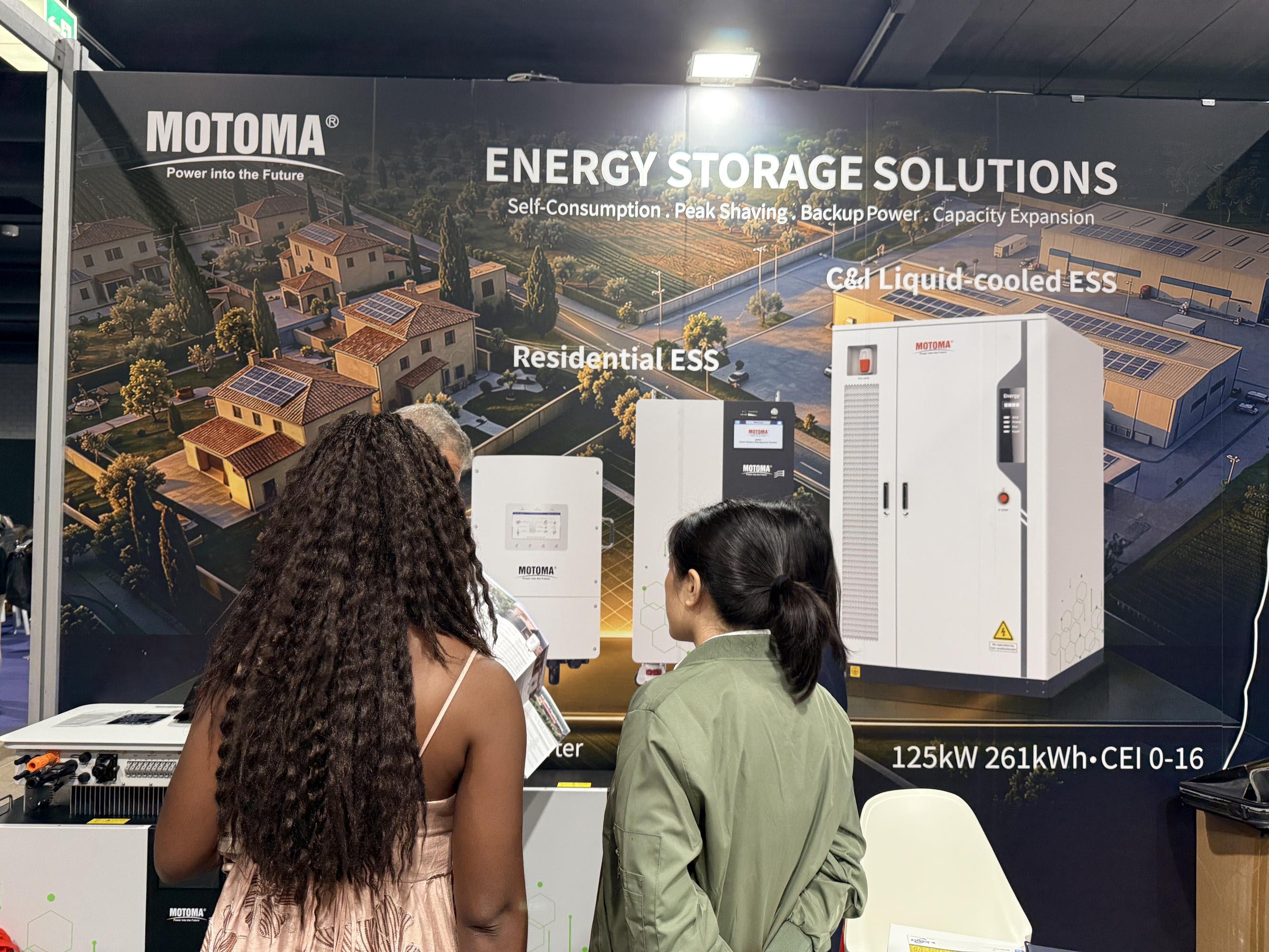
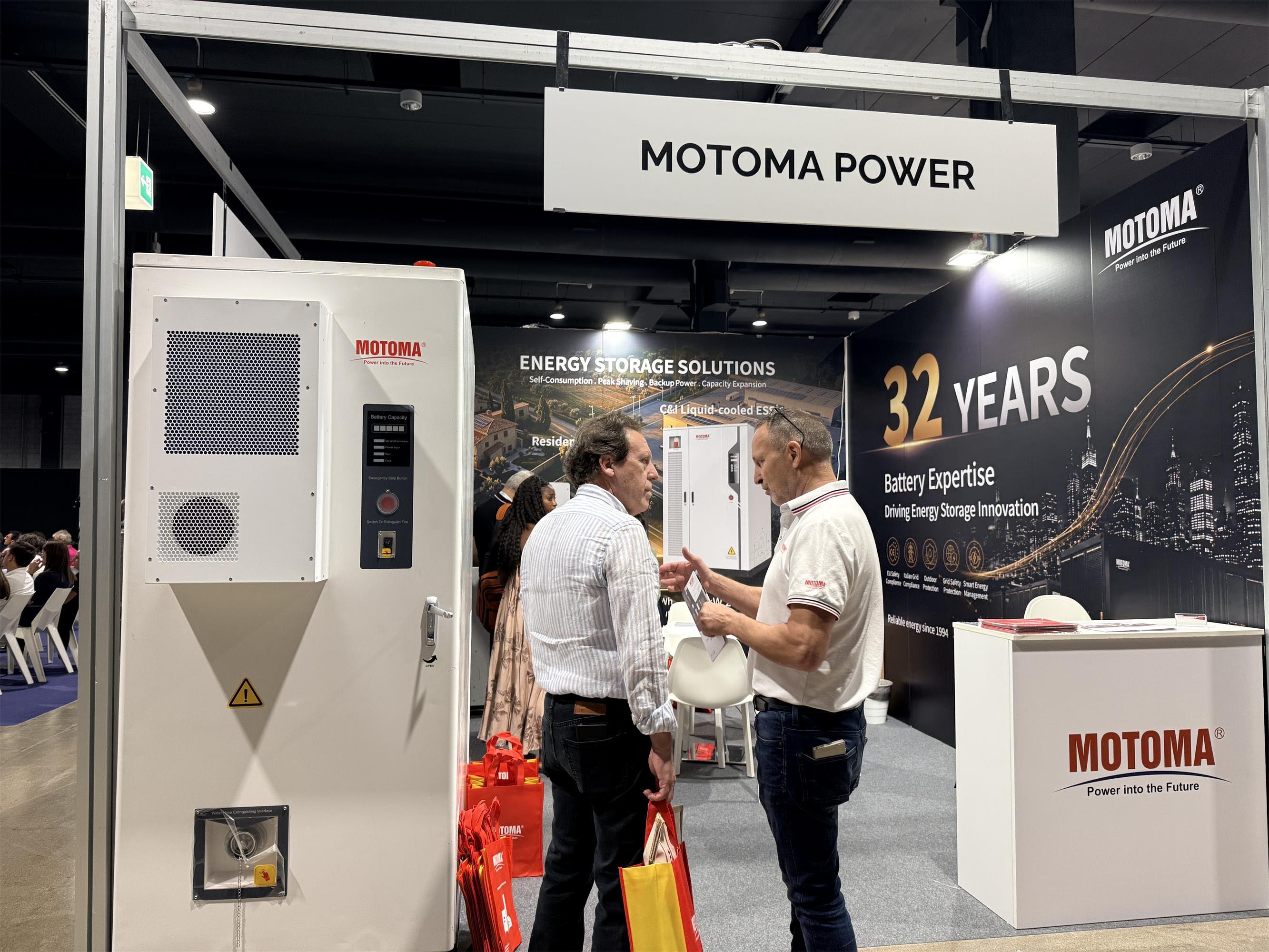
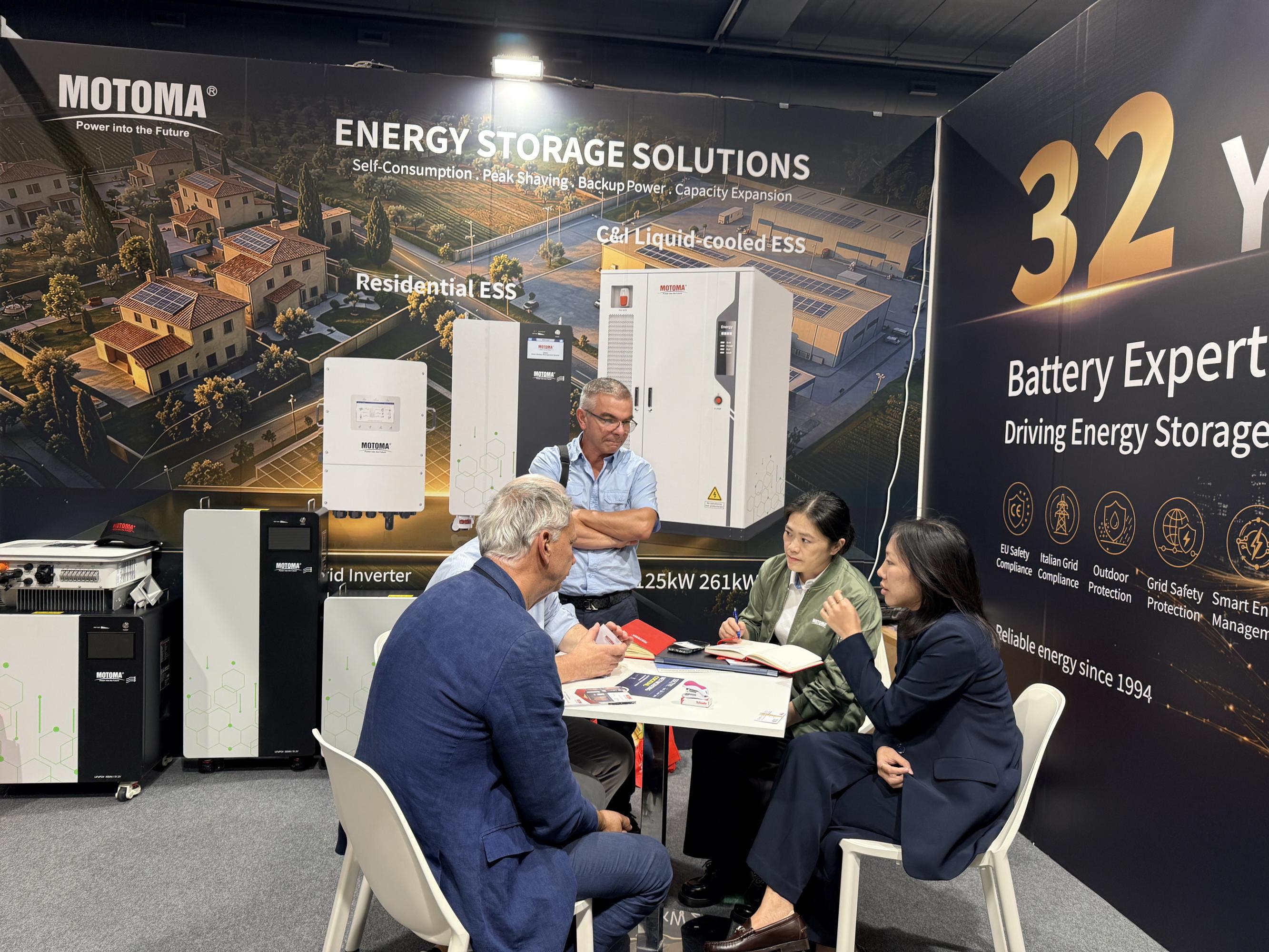
Vicenza, Italy, September 2026 – MOTOMA has concluded its participation in the Storage & Solar Expo Conference 2026 (SSEC 2026), held on September 22–23 at the Vicenza Expo Centre in Italy. At Hall 1, Booth 218, the company welcomed solar distributors, project developers, EPC contractors, installers and other energy industry professionals from across Europe for discussions about photovoltaic systems, battery energy storage and project-specific system requirements.
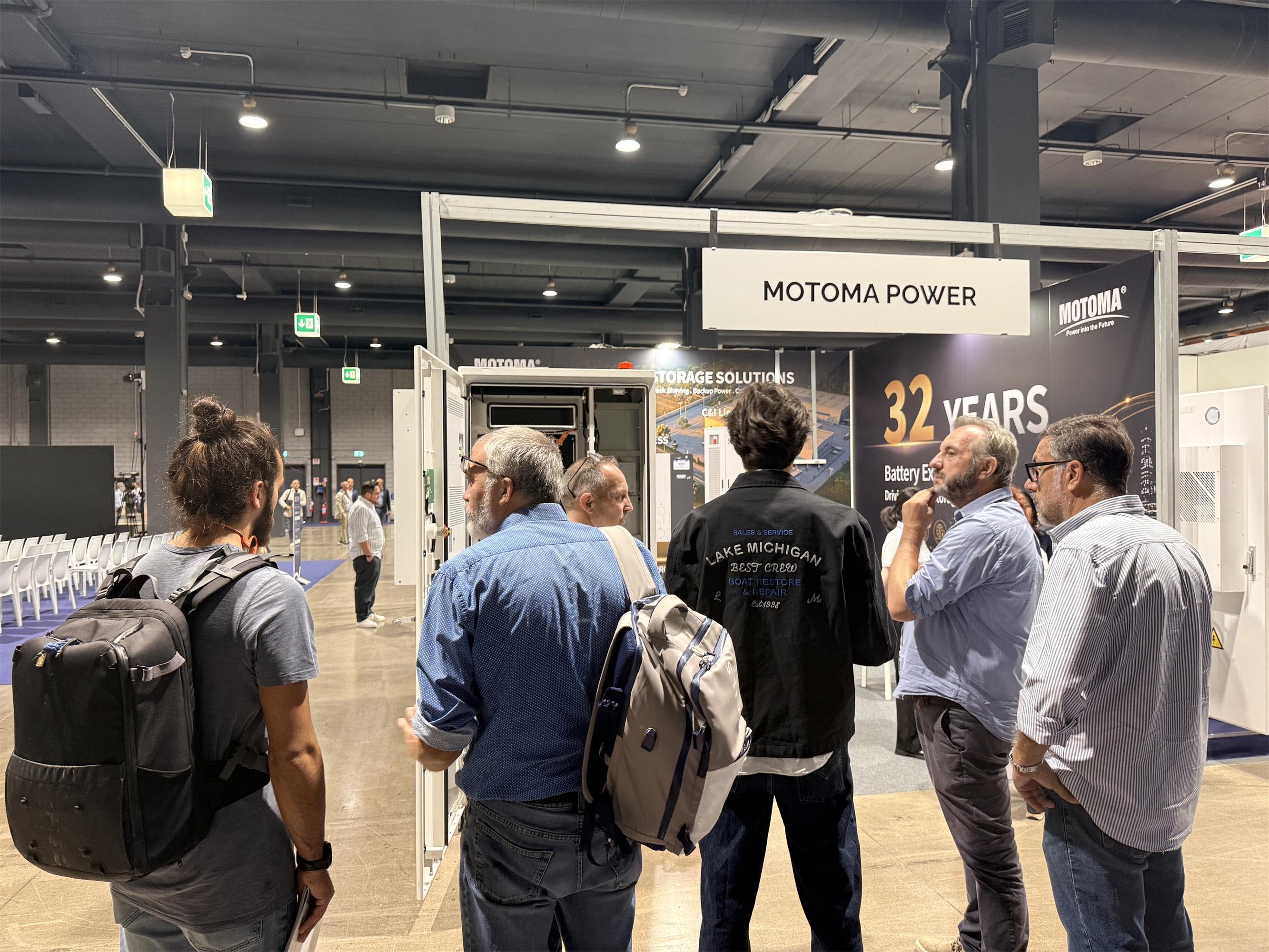
The event provided an opportunity to exchange views on the changing needs of the Italian solar market and the wider European energy storage sector. Conversations covered residential battery storage, three-phase hybrid inverters, commercial and industrial battery energy storage systems, and the practical considerations involved in integrating batteries, inverters and energy management systems.
For MOTOMA, these discussions offered useful insight into the priorities of European distribution partners and project teams, including system configuration, product specifications, installation requirements and compliance documentation.
Discussions on Solar and Battery Storage Applications in Italy
Italy‘s solar market includes a broad range of applications, from residential rooftop photovoltaic systems to commercial buildings, industrial facilities and distributed energy projects. In northern Italy, including Veneto, Lombardy, Emilia-Romagna and Trentino-Alto Adige, energy storage can form part of project planning for manufacturing facilities, warehouses, hotels, retail properties and other sites with on-site electricity demand.
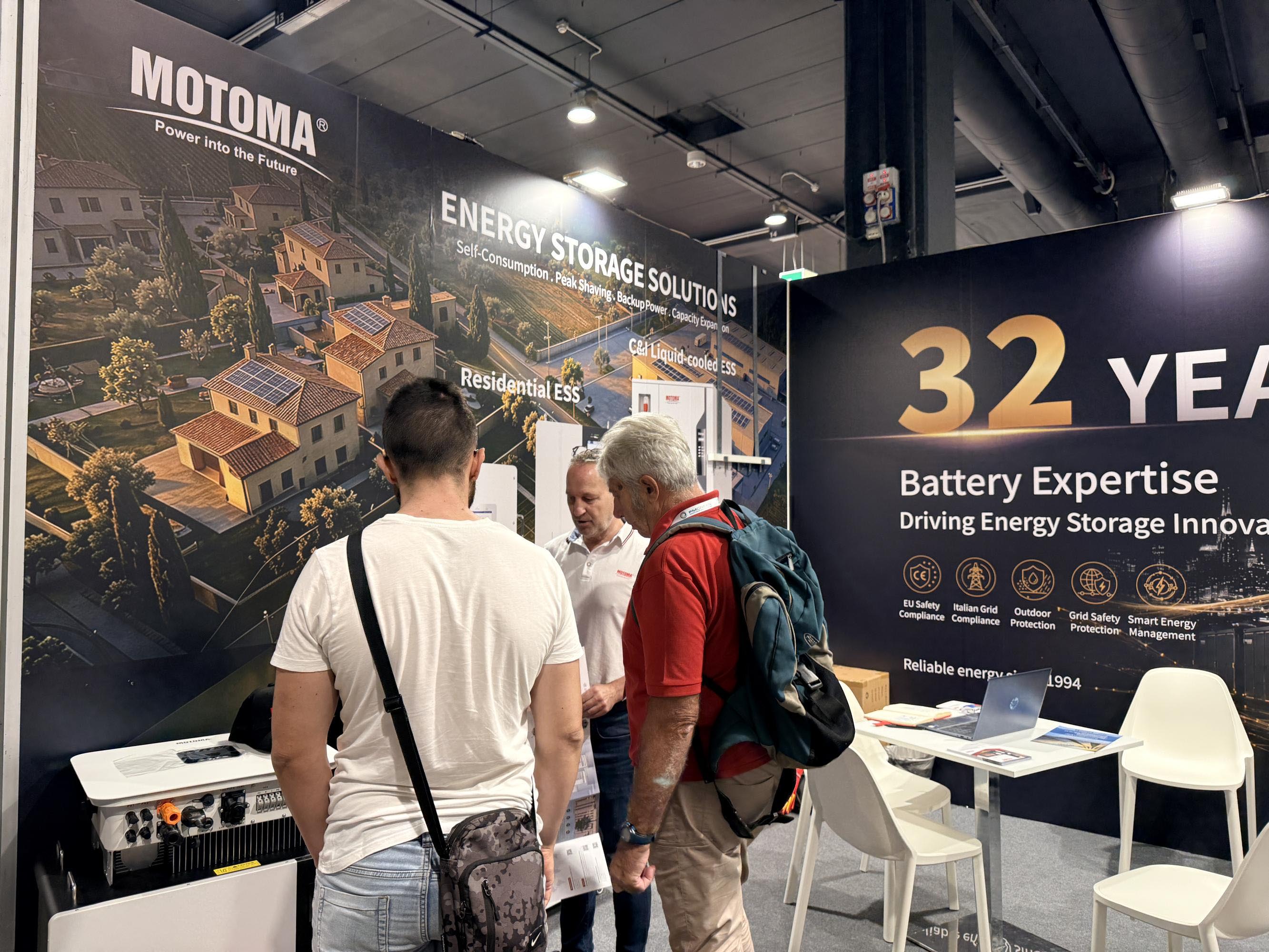
During SSEC 2026, MOTOMA presented energy storage products for different system sizes and operating requirements. The product portfolio supports discussions with solar installers, electrical contractors, system integrators and project developers who need to evaluate battery capacity, inverter compatibility, power requirements and monitoring functions for individual installations.
Residential applications may require a battery system for solar self-consumption and backup power, while commercial and industrial projects may call for higher-capacity storage, energy management and coordinated operation with photovoltaic generation. The appropriate configuration depends on the site‘s load profile, grid connection, operating objectives and local technical requirements.
MOTOMA Energy Storage Products Featured for European Projects
MOTOMA‘s product range includes residential LiFePO4 batteries, three-phase hybrid inverters and integrated commercial and industrial energy storage systems. The following products illustrate different options for solar and battery storage projects in Italy and other European markets.
261kWh Liquid-Cooled All-in-One Energy Storage System for Commercial and Industrial Applications
The MOTOMA M125-261 liquid-cooled energy storage system is designed for commercial and industrial battery energy storage applications. It combines a lithium iron phosphate (LiFePO4) battery system with a power conversion system (PCS), battery management system (BMS), energy management system (EMS) and liquid-cooling equipment in an integrated cabinet.
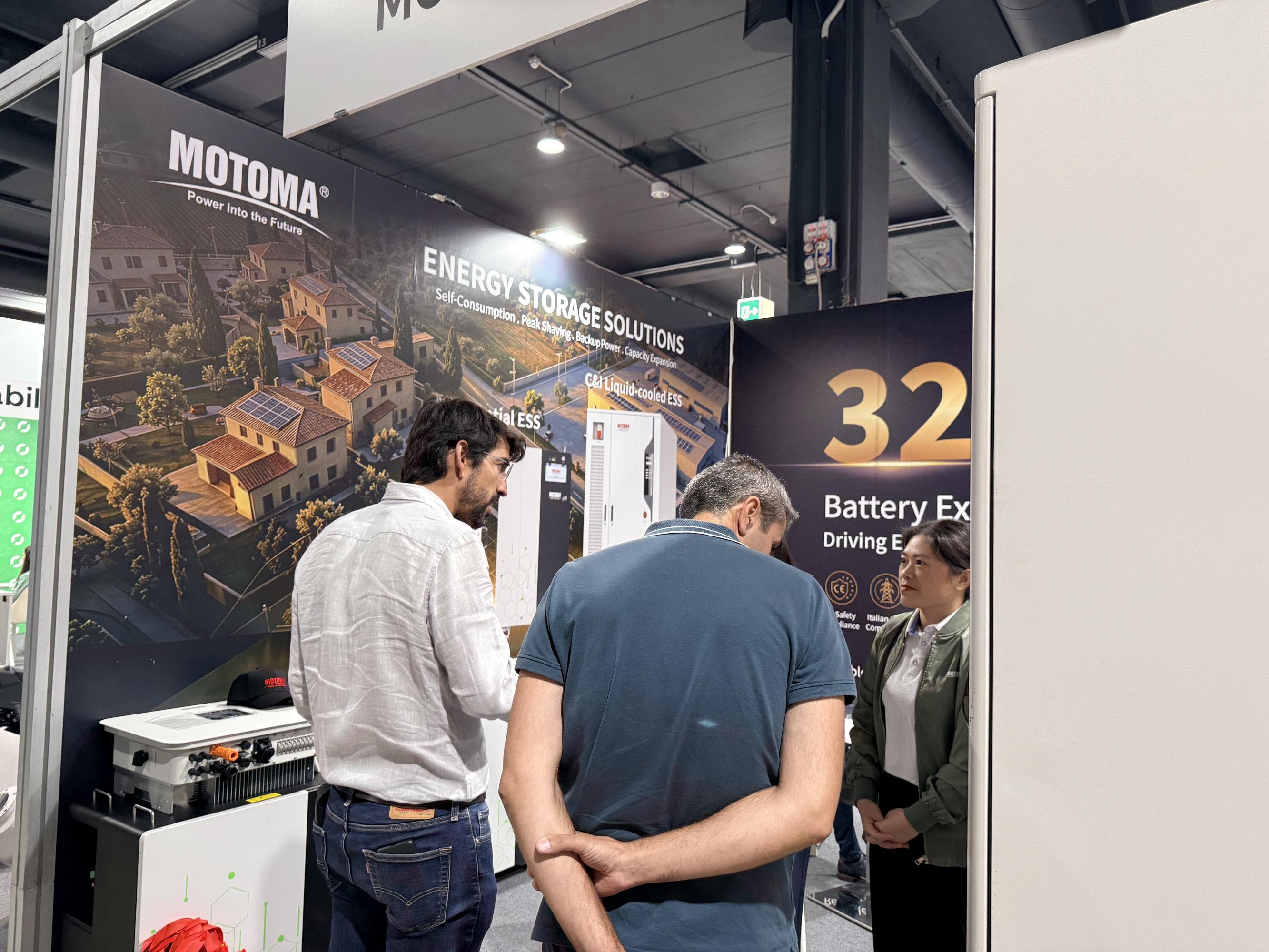
- Rated battery energy: 261.248kWh
- Rated AC power: 125kW
- Rated DC voltage: 832V
- Battery technology: LiFePO4
- Thermal management: Smart liquid cooling
- Cabinet protection rating: IP54
- Intended applications: Commercial and industrial energy storage, peak shaving and backup power
The integrated design gives project developers and system integrators a combined battery and power conversion platform to assess for larger solar-plus-storage installations. Potential application scenarios include industrial facilities, logistics sites, commercial buildings and other locations where battery storage is being considered alongside on-site solar generation.
The product specifications list IEC 62619, IEC 60730, IEC 61000, IEC 62477, EN 50549, VDE-AR-N 4105, VDE-AR-N 4110 and VDE-AR-N 4120, as well as UN 38.3 and UN 3480 references. The applicable standards, documentation and grid connection requirements should be verified against the specific project and installation country.
12kW Three-Phase Hybrid Inverter with IP66 Protection
The MOTOMA Elite 12kW three-phase hybrid inverter is designed for solar and battery storage systems requiring grid-connected, off-grid and hybrid operating modes. Its IP66-rated enclosure, dual MPPT design and monitoring functions offer installation and configuration options for different system requirements.
- Rated output power: 12kW
- Maximum PV input power: 18,000W
- Rated AC output: 230V phase-to-neutral / 400V phase-to-phase
- Enclosure protection: IP66
- Operating modes: Grid-tied, off-grid and hybrid
- Monitoring: Wi-Fi and mobile application
- Communication interfaces: RS-232, RS-485, USB and CAN
- Parallel operation: Up to six units, subject to system configuration
The inverter is specified with grid-connection references including EN 50549-1 and VDE-AR-N 4105. For projects in Italy, Germany or other European countries, installers and engineering teams should confirm the applicable national grid code, current standard edition, distribution system operator requirements and product documentation before selecting or commissioning the equipment.
View the 12kW hybrid inverter specifications.
20kWh-Class LiFePO4 Battery for Residential Solar Storage and UPS Systems
For residential solar energy storage and backup power applications, the MOTOMA M91W MIN battery offers a nominal energy capacity of 19.968kWh. Its 51.2V battery platform is intended for integration into compatible home energy storage systems, solar installations, UPS and EPS applications.
- Nominal voltage: 51.2V
- Rated capacity: 390Ah
- Nominal energy: 19.968kWh
- Battery chemistry: LiFePO4
- Maximum continuous charge current: 200A
- Maximum continuous discharge current: 200A
- Cycle life: Up to 8,000 cycles at 80% depth of discharge under the stated test conditions
- Communication: CAN, RS-232 and RS-485
- Parallel connection: Up to 15 battery units, subject to system design and compatibility
The battery‘s capacity and communication options make it a candidate for residential solar-plus-storage and backup power projects that require a larger battery capacity. Its integration with a hybrid inverter should be checked against the inverter manufacturer‘s approved compatibility information, BMS communication requirements, charging limits and system design.
View the M91W MIN battery specifications.
European Compliance and Grid Integration: Considerations for Solar Installers
For solar and battery energy storage projects in Italy and across Europe, product specifications are only one part of the selection process. Project teams must also consider the legislation applicable to each product, conformity assessment, technical documentation, installation conditions and the requirements of the local electricity network.
Where required by the applicable EU legislation, CE marking is associated with conformity to the relevant product requirements and must be supported by the appropriate conformity assessment and technical documentation. It should not be treated as a standalone certificate of grid connection or as proof that a system automatically meets every national installation requirement.
Grid connection is a separate consideration. EN 50549-1 addresses requirements for generating plants operating in parallel with low-voltage distribution networks, while VDE-AR-N 4105 is a German national technical connection rule for generation installations connected to low-voltage networks. These references do not replace the need to check the specific requirements that apply at the installation location.
For Italian photovoltaic and energy storage projects, distributors, EPC contractors and installers should review the relevant Italian connection rules, applicable product documentation and requirements of the local distribution system operator. Battery transport, handling, installation and safety documentation should also be assessed for the intended application.
By providing product-level technical information and a range of storage options, MOTOMA aims to support these evaluations with its distribution and project partners. Final system selection should be based on the actual load profile, site conditions, compatibility requirements and applicable regulatory framework.
Strengthening Relationships with European Distribution and Project Partners
SSEC 2026 gave MOTOMA an opportunity to meet professionals involved in the European photovoltaic and energy storage supply chain. Discussions with distributors, project developers, installers and system integrators helped identify practical questions that arise when selecting battery storage equipment for residential, commercial and industrial projects.
As the company continues to engage with the Italian and wider European markets, MOTOMA will focus on communicating product specifications, supporting system compatibility assessments and discussing storage configurations with local partners. The objective is to establish working relationships around project requirements rather than promote a single configuration for every application.
MOTOMA thanks everyone who visited Hall 1, Booth 218 at the Vicenza Expo Centre on September 22–23, 2026. The company looks forward to continuing conversations with solar distributors, EPC companies, installers and energy project developers in Italy and across Europe.
For further information about MOTOMA residential batteries, hybrid inverters and commercial and industrial energy storage systems, visit the relevant product pages on the MOTOMA official website.