
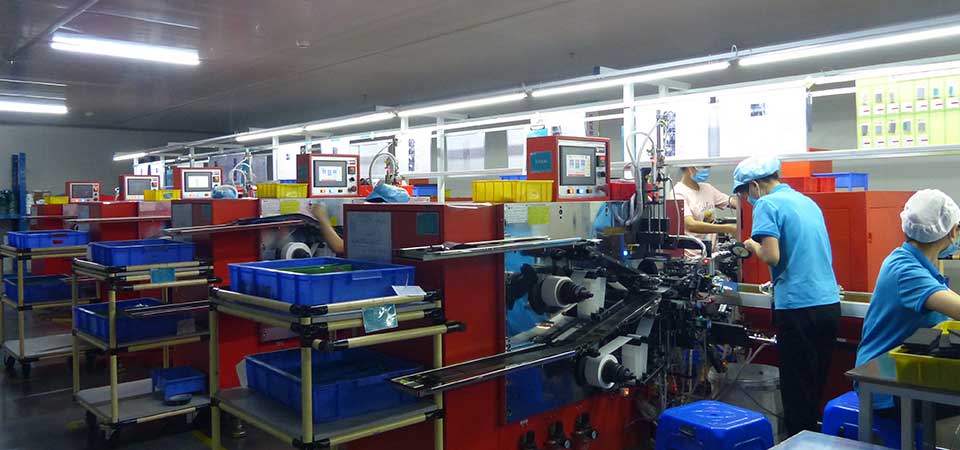
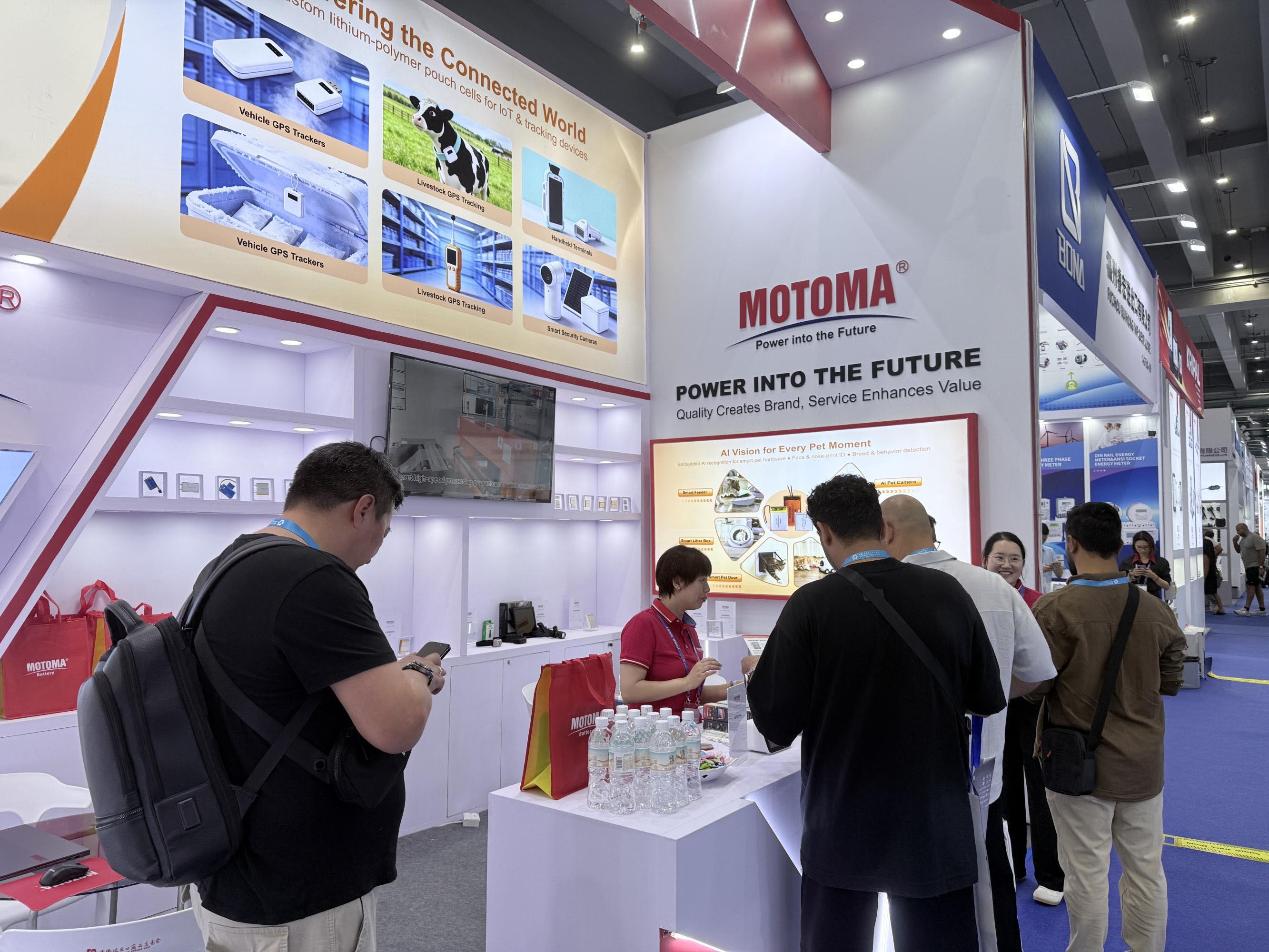
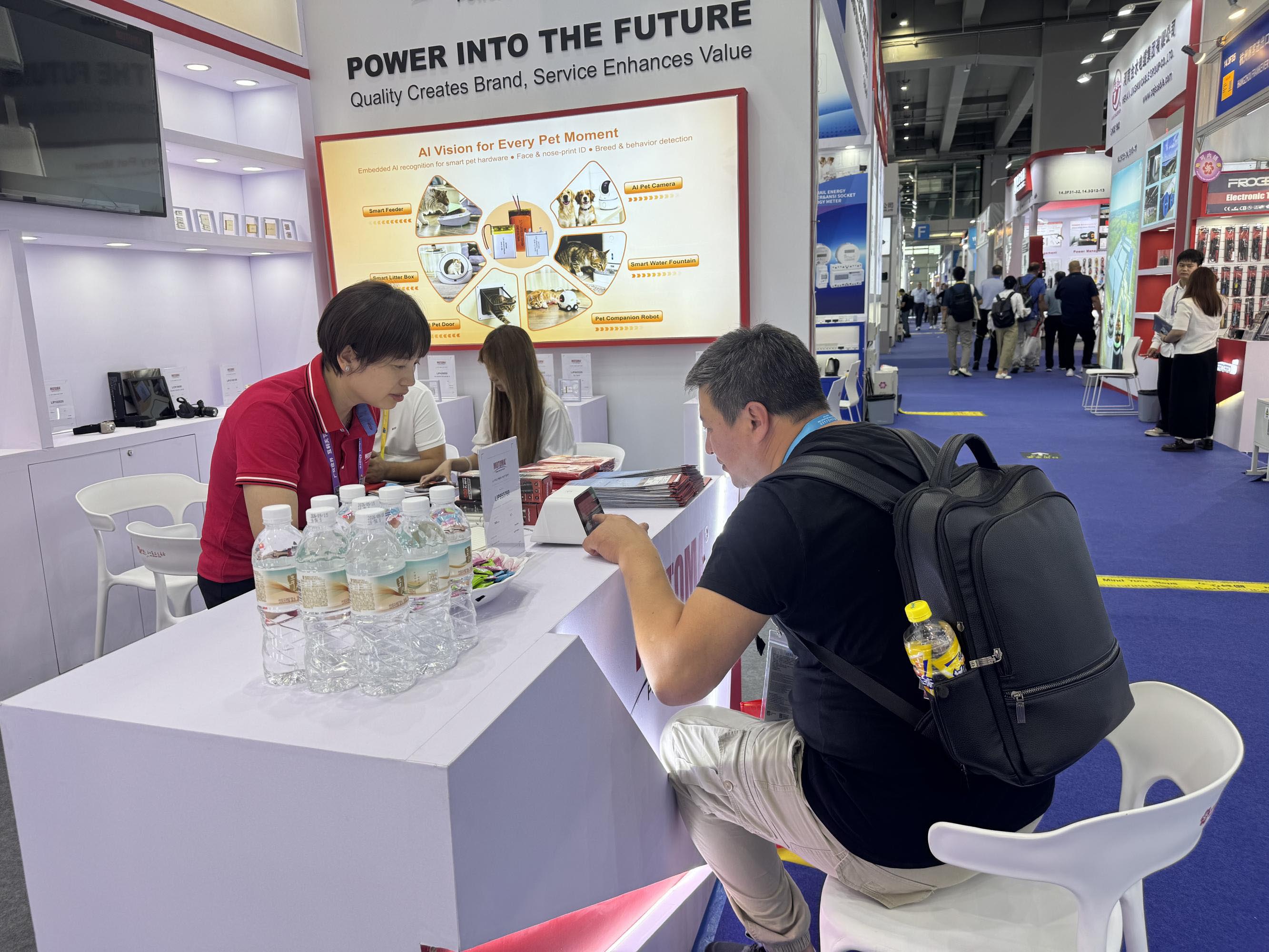
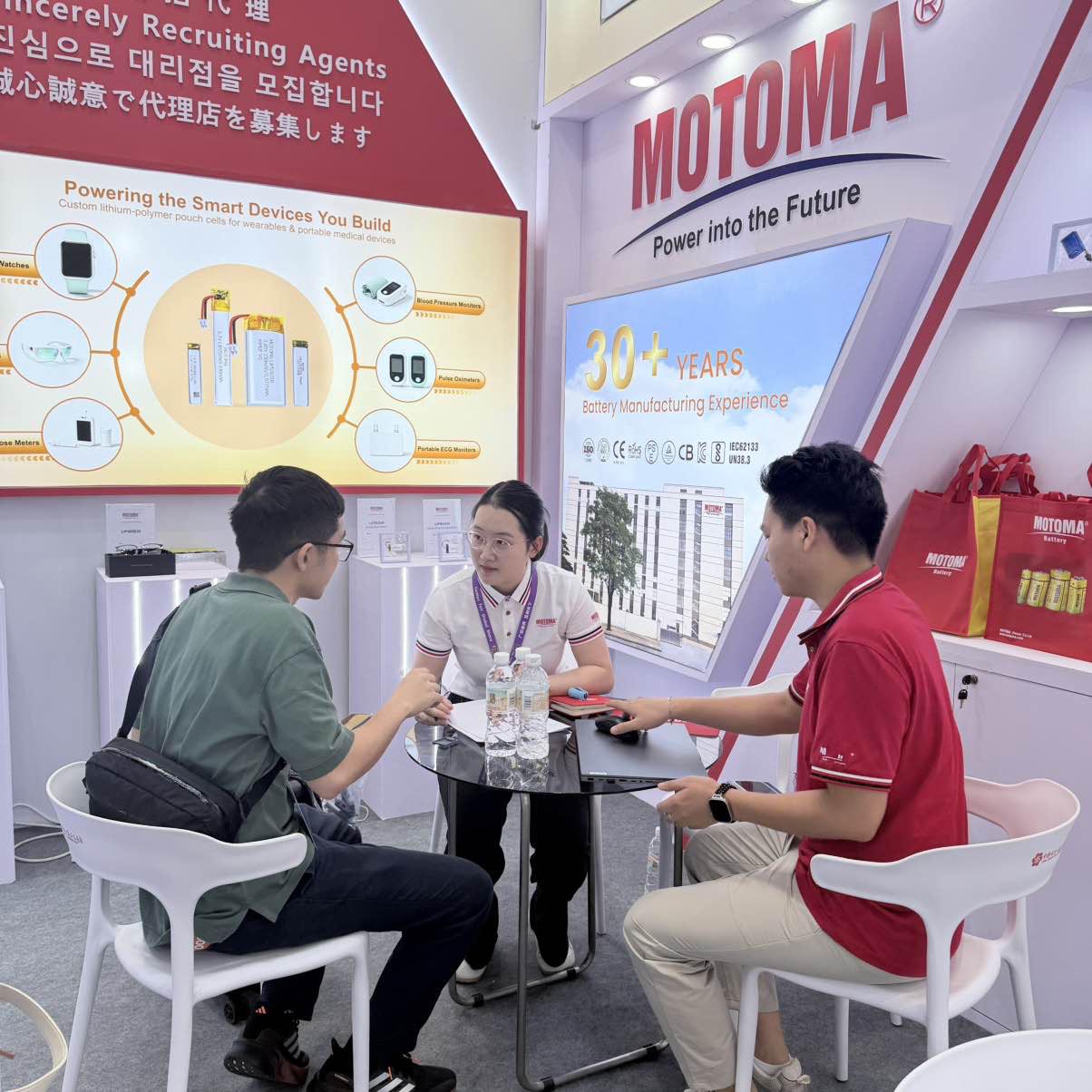
MOTOMA took part in the 140th Canton Fair from October 15 to 19 2026, presenting its lithium polymer battery capabilities for AI-powered electronics, wearable devices and other compact electronic products. At Hall 14.3, Booth F06–F07, the company focused on battery customization for applications where limited installation space, specific shapes, operating temperatures and electrical requirements influence product design.
As AI features become more common in smart glasses, wearable recorders, intelligent healthcare devices and portable electronics, battery design is becoming an increasingly important part of product development. Engineers need to balance capacity, operating voltage, peak current, dimensions, weight, thermal conditions and safety requirements within increasingly compact enclosures. For OEMs and product developers, selecting a suitable battery early in the design process can help avoid unnecessary mechanical redesign and integration challenges.
Custom Lithium Polymer Batteries for Compact AI Hardware
AI-enabled devices often combine cameras, microphones, wireless communication, sensors and on-device processing or cloud-connected AI functions. Their power consumption can vary considerably according to operating mode, transmission activity and processing workload. A battery therefore needs to be evaluated against the complete device‘s power profile rather than capacity alone.
MOTOMA develops custom lithium polymer battery solutions for electronic product manufacturers requiring flexible dimensions and application-specific electrical characteristics. Depending on the design, battery customization can cover length, width, thickness, capacity, voltage, discharge performance, connector position, lead configuration and pack construction.
- Ultra-thin batteries: Designed for slim wearable electronics, compact AI accessories, smart badges and space-constrained portable devices.
- Curved and irregular-shaped batteries: Developed around the available installation space in wearable products, ergonomic enclosures and other non-rectangular electronic designs, subject to cell construction and manufacturing feasibility.
- Small-format pouch cells: Suitable for applications such as AI voice recorders, smart wearables, compact sensors, handheld terminals and selected medical electronic devices.
- Custom voltage and capacity: Battery configurations can be assessed against the device‘s power consumption, operating voltage, runtime target, charging system and available space.
- Application-specific battery packs: Protection circuits, connectors, wiring, temperature sensing and other pack-level features can be evaluated according to project requirements.
For development teams, the objective is not simply to fit a battery into a smaller enclosure. It is to find a workable balance between usable energy, peak power demand, mechanical tolerances, heat management, charging requirements and product safety.
Real-World AI Device Examples and Battery Parameters
Commercial AI devices provide useful reference points for understanding the range of battery requirements in this market. The following examples highlight typical battery configurations and technical parameters found in different categories of AI-powered devices.
- AI Smart Glasses: Battery capacities in compact AI smart glasses commonly range from approximately 160 mAh to 250 mAh, depending on device design and functionality. These wearable devices integrate features such as cameras, wireless connectivity, audio playback and AI-assisted interactions. Their lightweight frames and limited internal space require compact lithium battery solutions with suitable energy density, stable power output and efficient thermal management.
- Portable AI Voice Recorders: Compact AI voice recording devices may use rechargeable lithium batteries with capacities of around 500 mAh. These devices typically incorporate multiple microphones, built-in storage and AI-assisted functions such as voice recording, speech recognition and meeting transcription. Their slim, portable designs require batteries that balance energy capacity, operating time, charging performance and space efficiency.
- AI Camera Smart Glasses: AI-enabled camera glasses may use rechargeable lithium batteries with typical specifications such as 3.8 V nominal voltage and 220 mAh capacity. Depending on the battery chemistry and device design, operating voltage requirements may fall within approximately 3.3–4.2 V. Under certain operating conditions, devices in this category may support several hours of audio playback. Actual runtime depends on power consumption, wireless activity, camera usage and other operating conditions.
These examples demonstrate why battery selection for AI devices should consider more than nominal capacity. Power consumption during camera operation, wireless transmission, audio playback and AI interactions can differ significantly from standby requirements. Engineers should evaluate continuous and peak discharge current, operating voltage range, charging limits, thermal performance, battery dimensions and actual runtime under representative operating conditions. Selecting a suitable rechargeable lithium battery helps support reliable performance, efficient power management and compact product design.
Wide-Temperature and Special-Environment Battery Requirements
Not all AI-powered electronics operate in a controlled indoor environment. Industrial inspection devices, outdoor monitoring equipment, portable terminals and selected medical or field-use electronics may be exposed to low or high ambient temperatures. In these applications, temperature affects not only battery performance but also charging conditions, available capacity, internal resistance, service life and safety.
MOTOMA supports project discussions involving application-specific operating-temperature requirements, including custom battery development for designs targeting temperatures from -40°C to +85°C where technically feasible. This range should be treated as a project requirement rather than a universal operating specification for standard lithium polymer cells.
Achieving a wide operating-temperature range depends on cell chemistry, electrolyte formulation, electrode materials, packaging, protection circuitry, charging strategy and the intended duty cycle. Low-temperature discharge performance does not automatically establish low-temperature charging capability, and a cell rated for elevated-temperature operation may require additional validation at the pack and device levels.
For projects with demanding environmental requirements, MOTOMA recommends defining the required temperature range separately for charging, discharging, storage and transportation. Test conditions should reflect the actual application, including load current, exposure duration, charging behaviour and temperature transitions.
Battery Safety, Testing and Regulatory Compliance
Battery safety and market access are essential considerations when integrating lithium polymer batteries into AI electronics. A compact form factor does not reduce the need for appropriate electrical protection, mechanical integrity, charging control and validation against the intended operating environment.
MOTOMA works with customers to identify relevant testing and documentation requirements for their battery models and target markets. Depending on the specific cell or battery pack, product configuration and destination country, applicable documents or certifications may include:
- UN 38.3: Transport testing requirements for lithium cells and batteries.
- MSDS/SDS: Safety information concerning battery materials and handling.
- IEC 62133-2 and CB: Relevant safety standards and certification routes for portable sealed secondary lithium cells and batteries, subject to the applicable scope.
- UL: Applicable UL standards and certification pathways for lithium cells and battery products.
- KC, BIS and KSE: Relevant national certification or compliance requirements, depending on the product category and destination market.
- REACH and RoHS: Chemical-substance and restricted-substance compliance requirements applicable to the product and its market.
Certification scope varies by product, model, configuration and market. These standards and documents are not interchangeable, and not every battery automatically holds every certification listed above. Customers should confirm the applicable requirements and verify the certificates and test reports for the exact battery model and configuration before procurement or product launch.
For customized batteries, safety evaluation should also consider the final pack design, battery management or protection circuitry where applicable, charging equipment, enclosure, thermal conditions and foreseeable misuse. A cell-level test result alone does not establish the safety or regulatory compliance of every finished electronic product.
Working with Products Design Company from Battery Design to Product Integration
For AI hardware developers, battery customization is most effective when it begins alongside mechanical and electrical design. Early communication helps establish the available battery space, required nominal voltage, target capacity, continuous and peak current, charging method, connector location, operating temperature and expected service life.
MOTOMA works with product design customers to review these requirements and assess possible lithium polymer battery configurations. Depending on the project, the development process may include dimensional review, prototype evaluation, electrical testing, thermal assessment, protection-circuit selection and verification of applicable compliance requirements.
This approach is relevant to AI smart glasses, wearable AI assistants, voice-recording devices, intelligent healthcare electronics, IoT sensors, GPS equipment, handheld terminals and other products where battery dimensions and electrical performance must fit a specific design.
For European and international manufacturers, the final battery specification should be agreed with the device engineering team and checked against the applicable product safety, transport and market-access requirements before mass production.
Discuss Your Custom AI Battery Requirements with MOTOMA
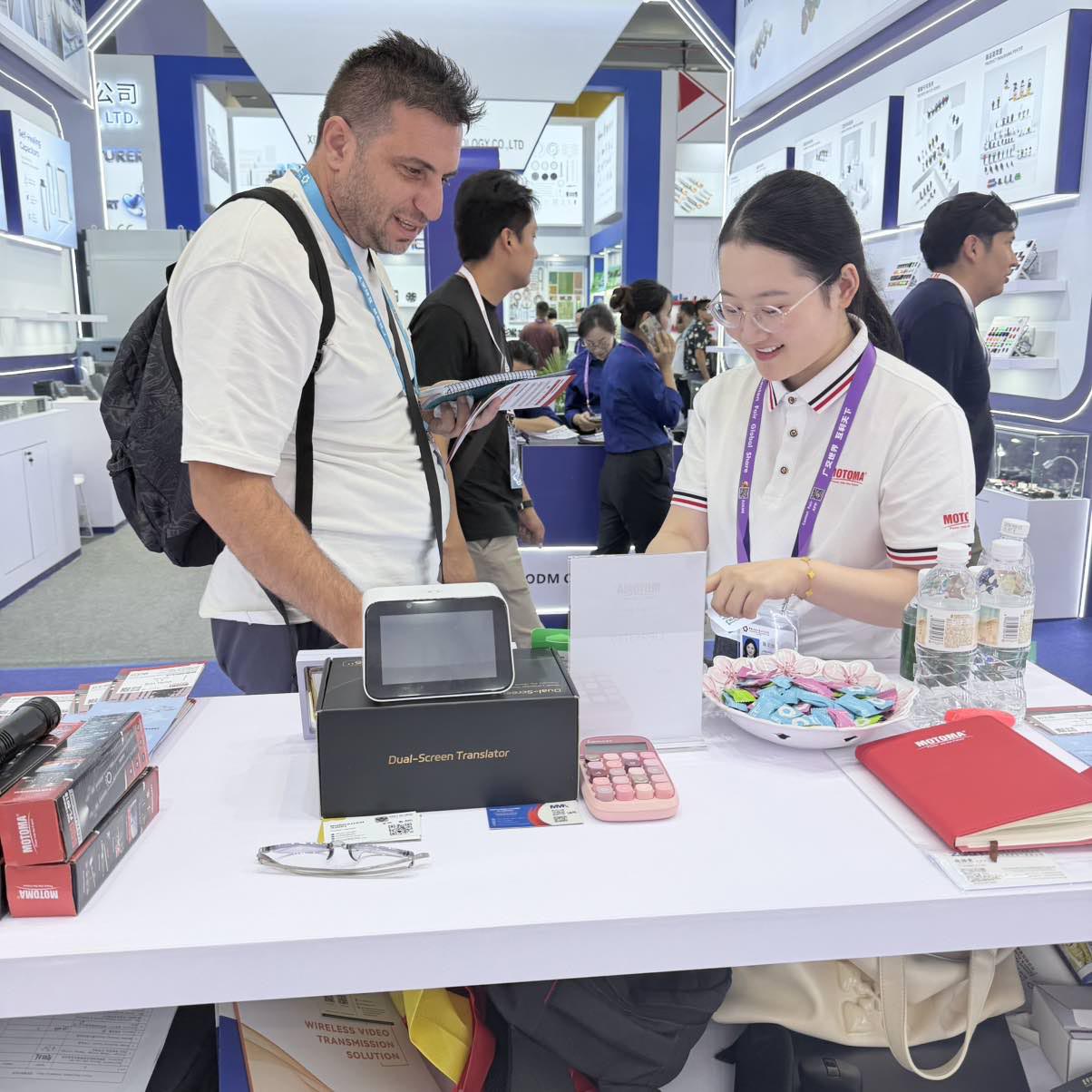
The October 2026 Canton Fair provided an opportunity for MOTOMA to present its battery customization capabilities and exchange technical requirements with electronic product manufacturers. As AI hardware continues to diversify, the company remains focused on practical battery engineering for compact designs, specialized form factors and application-specific operating conditions.
OEMs and product development teams planning a new AI-enabled device can contact MOTOMA to discuss ultra-thin lithium polymer batteries, curved and irregular-shaped pouch cells, custom voltage and capacity, and project-specific temperature requirements.
To support an initial technical assessment, customers are encouraged to provide the device application, available battery dimensions, target voltage and capacity, continuous and peak current, charging conditions, operating-temperature range and required compliance documents.
MOTOMA — Custom lithium polymer battery solutions for AI electronics, wearable devices and specialized applications.